The Government’s 3-Day Myth: Why Real Preparedness Means 30 Days on Your Own
Don’t panic. But don’t wait either.
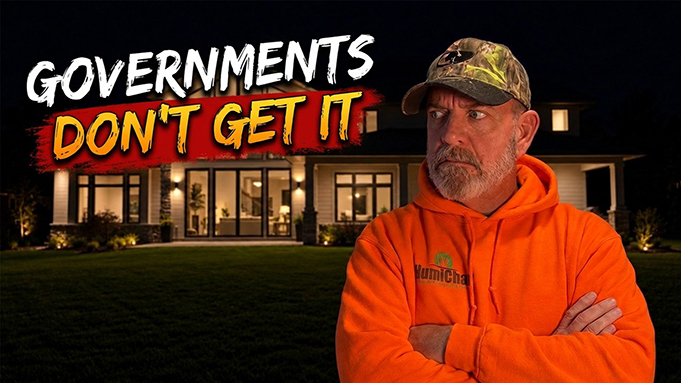
Across the globe, governments and international organizations are rushing to push a common message to everyday households: keep some extra food, water, and basics at home. But there is a glaring, dangerous flaw in almost all official government guidance. Bureaucrats sitting in climate-controlled offices love to hand out neat, tidy checklists telling citizens to prepare for three days—assuming help will magically arrive on day four.
Recent history has completely shattered that illusion. When catastrophic disasters strike—whether it’s the widespread devastation left behind by Hurricane Helene or severe, prolonged ice storms knocking out regional power grids—emergency services, municipal utilities, and government aid simply cannot reach hard-hit areas for one to two weeks, and sometimes even longer.
Relying on a meager 3-day supply is a recipe for disaster. To truly be independent in a long-term emergency, households need at least two weeks, if not a full 30 days of supplies on hand. And government kits are full of bureaucratic blind spots—telling families to stock up on token items like hand sanitizer while completely ignoring the actual hardware required to survive a systemic collapse. Hand sanitizer won’t keep your food from spoiling when the refrigerator dies, it won’t power a well pump, and it won’t keep your family warm. True resilience requires robust infrastructure, including a heavy-duty backup battery system.
Yet, despite these short-sighted official baselines, the fact that 33 countries across six continents are now actively urging citizens to build emergency kits marks a massive shift in the global mainstream.
The Perfect Storm: Why the Sudden Global Push?
Security experts point to a convergence of escalating global risks—often referred to as a “polycrisis”—that have forced governments and defense establishments to rethink civil defense.
- Geopolitical Tensions and Hybrid Warfare: Heightened friction involving major global powers, rising cyberattacks targeting critical infrastructure (such as power grids and water supplies), and ongoing conflicts have exposed severe vulnerabilities in modern supply chains.
- Climate and Extreme Weather Disasters: More frequent and severe natural disasters—ranging from catastrophic wildfires and floods to prolonged winter storms—frequently knock out essential municipal services and power grids for weeks at a time.
- The “First Responder” Gap: During a major systemic shock, emergency services and hospitals are immediately overwhelmed. As recent hurricanes and ice storms proved, government help may not arrive for 7 to 14 days, meaning families must be entirely self-sufficient.
- The Explosion of Rogue AI and Cyber Threats: The rapid advancement of artificial intelligence has introduced unprecedented systemic risks. Recently, $6 billion was stolen from Bitcoin in sophisticated attacks, and recent exploits have opened up massive vulnerabilities throughout banking and government websites. Security analysts warn this threat landscape is only going to accelerate as foreign adversaries and rogue actors gain access to increasingly advanced AI capabilities.
- Military Signaling (The FORTRESS Initiative): Even the U.S. military recognizes that relying on fragile infrastructure is a fatal flaw. Under the Pentagon’s FORTRESS initiative (Federal Operations for Resilience, Troop Resources, Energy, Supply and Survivability) unveiled by Defense Secretary Pete Hegseth, major continental bases are being required to operate completely independently for 90 days using microgrids, battery storage, portable nuclear reactors, and strategic reserves because civilian dependence is viewed as an “intolerable risk.”
Global Breakdown: The 33-Country Rollout
The push for self-reliance is coordinated across international alliances. The European Commission’s Preparedness Union Strategy set a baseline encouraging member states to help citizens maintain essential supplies, though visionary preppers know that stretching those timelines far beyond the official minimum is essential.
Across the globe, national rollouts reflect distinct regional risks:
- United Kingdom: Launched the multi-year “Be Ready” campaign in late October 2026. Households are urged to prepare for disruptions without normal access to electricity, water, phones, or internet, stocking roughly 3 liters of drinking water per person per day, non-perishable food, and torches.
- France: National guidance and regional messaging (such as in Normandy) focus heavily on emergency readiness, urging citizens not to wait for an crisis to unfold.
- Germany: The Federal Office of Civil Protection advises aiming for up to 10 days where possible, emphasizing clean drinking water (roughly 2 liters per person per day) and long-term provisions.
- Sweden & Norway: Aim for a full week or more. Sweden’s updated “In Case of Crisis or War” brochure, distributed to millions of households, emphasizes water, non-perishable food, alternative heat sources, communication tools, and sanitation.
- Other European Nations: The Netherlands, Denmark, Finland, Ireland, Austria, Switzerland, Poland, the Baltic states (Estonia, Latvia, Lithuania), Czech Republic, and Croatia have all strengthened civil-defense messaging amid regional infrastructure sabotage and hybrid threats.
- North America: The United States (FEMA’s Ready Campaign), Canada, and Mexico actively push household emergency planning.
- Asia & Oceania: Japan, Taiwan, Israel, India, Singapore, Australia, and New Zealand focus heavily on natural disaster and grid resilience.
- South America & Africa: Countries including Brazil, Argentina, Chile, Colombia, and South Africa (such as Cape Town) have incorporated multi-day supply advisories into urban emergency frameworks.
Get the Real Checklist
If you want a comprehensive, battle-tested plan that bypasses bureaucratic fluff—shifting from a weak 3-day mindset to genuine 30-day self-reliance—check out the complete framework available at Grid Down Power.
The site features an extensive, no-nonsense Power Outage Checklist covering everything you actually need—from high-capacity portable power stations and backup battery systems to proper water filtration, emergency fuel storage, and critical gear.